
Summary
- Understand how high-quality infant daycare serves as a catalyst for rapid neurological development in the first 1,000 days.
- Explore the science of “serve and return” interactions and why they are the gold standard for childcare options for infants.
- Learn how a play-based curriculum differs from basic supervision by fostering sensory and motor skill milestones.
- Discover the importance of licensed, affordable infant care in providing a safe, consistent environment for early growth.
- Identify why choosing a professional center in Surrey, BC, like Surrey City Childcare, ensures your child benefits from expert-led early childhood education.
The first few months of a child’s life are often viewed through the lens of basic needs: feeding, sleeping, and safety. However, underneath that sleepy exterior, an infant’s brain is a hive of activity, forming upwards of one million new neural connections every single second.
This biological reality is why the transition back to work is such a monumental decision for parents in British Columbia. Finding the right infant daycare is no longer just about finding a “babysitter”; it is about selecting an environment that acts as an extension of the home, specifically designed to nurture this explosive cognitive growth. In our local community, centers like Surrey City Childcare on Ave, Surrey, BC, have set a high standard, demonstrating that professional early years support is a foundational investment in a child’s lifelong learning potential.
The Science of the First 1,000 Days
To understand why a play-based approach is so effective, we must first look at the “plasticity” of the infant brain. In these early years, the brain is exceptionally sensitive to external stimuli. Every song sung, every texture touched, and every gentle face-to-face interaction helps “wire” the brain’s architecture.
A common misconception is that infants are too young for a “curriculum.” On the contrary, the best day care for infants understands that their curriculum is entirely sensory-based. It isn’t about flashcards or rote learning; it is about providing a rich landscape of experiences. When a child is in a high-quality setting, they aren’t just passing the time. They are developing the neural pathways responsible for language, emotional regulation, and problem-solving.
Why Play-Based Care Trumps Passive Supervision
In the past, many childcare options for infants focused solely on “custodial care”—essentially keeping the child clean, fed, and safe. While these are the non-negotiable basics, modern developmental science has shifted the focus toward “active engagement.”
Sensory Stimulation and Motor Skills
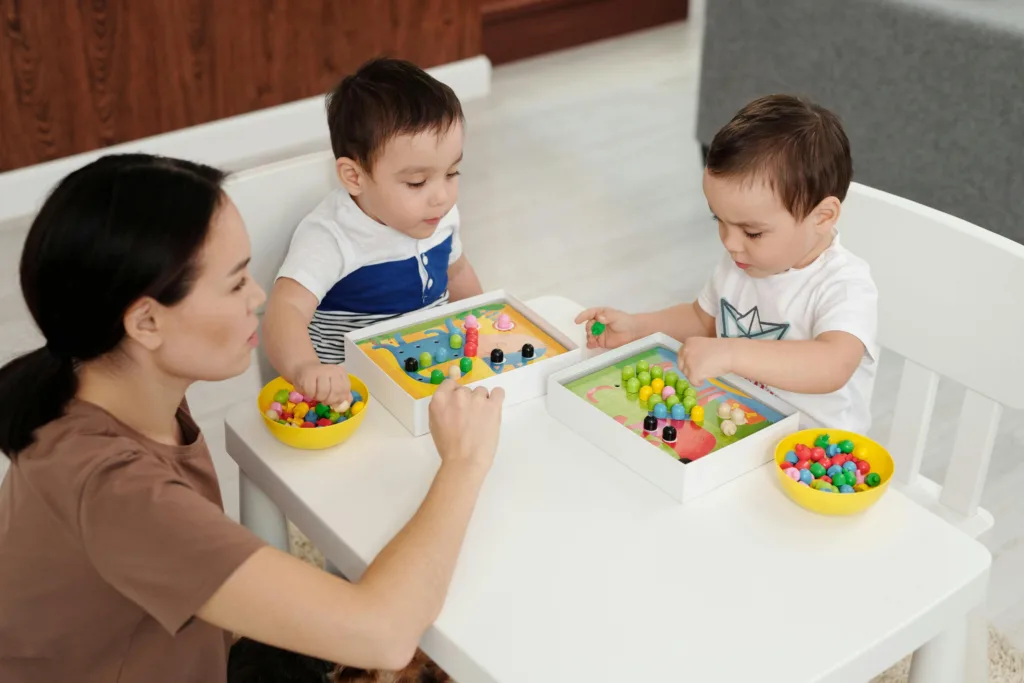
In a play-based environment, every toy and activity is intentional. A simple basket of different fabric scraps (silk, cotton, wool) becomes a lesson in tactile discrimination. A low-to-the-ground mirror encourages “tummy time,” which is essential for strengthening the neck and shoulder muscles required for crawling. These activities are designed to hit specific developmental milestones that a passive environment might overlook.
Language Acquisition
Infants are “statistical learners.” They track the frequency of sounds and the cadence of speech long before they can utter their first word. In a professional center, educators engage in constant narration. They describe what they are doing while changing a diaper or preparing a bottle. This constant stream of high-quality, responsive language is a significant predictor of later literacy and vocabulary depth.
The Search for Specialized Care: 24 Hour Considerations
In a growing, diverse city like Surrey, the traditional 9-to-5 workday doesn’t apply to everyone. Shift workers, healthcare professionals, and first responders often find themselves searching for 24 hour infant care. While most standard centers operate during business hours, the need for 24 hour daycare for infants highlights a critical gap in the market.
Regardless of the hours a center operates, the quality indicators remain the same:
- Low Ratios: Infants require high-frequency interaction. In BC, licensing regulations dictate strict ratios to ensure no child is left waiting for a “return” to their “serve.”
- Consistency: High staff turnover is detrimental to infants. They need to form a secure attachment with a consistent caregiver to feel safe enough to explore and learn.
- Cleanliness and Safety: A professional center must adhere to Fraser Health standards, ensuring that “play” happens in a sanitized, hazard-free zone.
The Architecture of “Serve and Return”
The most sophisticated technology in a daycare center isn’t a digital tablet or a high-tech swing; it is the human educator. The Center on the Developing Child at Harvard University popularized the concept of “serve and return” interactions.
When an infant “serves” by babbling, gesturing, or crying, and the adult “returns” the interaction with a look, a word, or a touch, neural connections are built and strengthened. This process is the fundamental building block of social-emotional health. In an affordable infant care setting that prioritizes quality, educators are trained to recognize these subtle cues. They don’t just “watch” the babies; they participate in a continuous, responsive dialogue that tells the child, “Your voice matters, and the world is a safe place to explore.”
Navigating Local Options in Surrey, BC
For families living near the Ave, Surrey, BC area, the logistics of childcare are just as important as the philosophy. Surrey is a bustling hub, and parents often feel the pressure of long waitlists and rising costs. However, the provincial government’s recent investments in the Affordable Child Care Benefit (ACCB) have made licensed, professional care more accessible than ever.
When evaluating local providers, look for those who integrate the BC Early Learning Framework. This framework emphasizes that children are “capable and full of potential.” It encourages educators to move away from a “teacher-led” model and toward a “child-led” model, even at the infant stage. By observing what a baby is interested in—perhaps the way light reflects off a window or the sound of a rattle—educators can tailor the environment to deepen that specific curiosity.
The Physical Environment as the “Third Teacher”
In the Reggio Emilia approach, which many top Surrey centers adopt, the environment is considered the “third teacher.” An infant daycare should look less like a hospital and more like a home.
- Natural Light: Essential for maintaining a child’s circadian rhythm and general mood.
- Open Spaces: Allows for the “freedom of movement” that Maria Montessori championed, encouraging infants to roll, scoot, and crawl.
- Natural Materials: Wooden toys, wicker baskets, and soft textiles provide a varied sensory experience that plastic toys often lack.
Bridging the Gap: Home and Center
A professional daycare center shouldn’t be an island. The best results occur when there is a seamless flow of information between parents and educators. High-quality centers provide daily reports—often through digital apps—that detail not just when the child slept or ate, but what they discovered. Did they reach for a new toy? Did they find their toes for the first time? This partnership ensures that the “serve and return” continues long after the child has been picked up for the day.
Addressing the “Affordability” Myth
Many parents assume that “the best” necessarily means “the most expensive.” In British Columbia, the push for affordable infant care has seen many licensed centers join the $10-a-day program or receive significant operating grants that lower the out-of-pocket costs for parents. High-quality, brain-boosting care is becoming a right rather than a privilege. When parents choose a licensed center, they are often accessing thousands of dollars in hidden value through specialized ECE training and government-regulated safety standards that unregulated options simply cannot match.
Frequently Asked Questions (FAQs)
What is the “serve and return” method in infant care?
It is a developmental concept where a caregiver responds to an infant’s cues (noises, facial expressions, or gestures) with appropriate feedback. This interaction is vital for building the brain’s architecture and emotional security.
Is it better to start daycare early or wait until my child is a toddler?
There is no “one size fits all” answer, but starting in an infant-specific program can provide socialization and sensory stimulation that supports early milestones. Professional centers are designed to handle the specific attachment needs of younger babies.
How do I know if a center in Surrey is actually licensed?
You can check the Fraser Health website for a directory of licensed facilities. All licensed centers, including Surrey City Childcare, are required to display their license prominently near the entrance.
What is the current availability for infants in the North Surrey area?
Demand for infant daycare remains high across Surrey. It is recommended to contact centers directly to inquire about their specific waitlist status. At Surrey City Childcare, we strive to provide timely updates to families in our local coverage area.
How quickly can I expect a response when inquiring about enrollment?
Most professional centers aim to respond within 24 to 48 business hours. Our team at Surrey City Childcare is committed to a customer-focused approach, ensuring local parents receive the information they need regarding program details and costs as quickly as possible.
Conclusion / Final Thoughts
Choosing a path for your child’s earliest years is a journey filled with both excitement and a touch of trepidation. However, understanding that high-quality care is a powerful tool for neurological development can turn that anxiety into confidence. A play-based approach ensures that your baby is not just being watched, but is being actively engaged in the world around them.
By prioritizing centers that value responsive caregiving, sensory-rich environments, and professional expertise, you are giving your child a cognitive head start that will serve them for decades to come. For families in our community, Surrey City Childcare remains a dedicated, professional partner, offering reliable and high-quality infant daycare that puts your child’s brain development at the heart of everything we do. Our team is here to support your return to work with the peace of mind that comes from knowing your child is thriving.