
Summary
- Preparing young children for the transition to elementary school requires a balanced, intentional approach to cognitive and social-emotional development.
- Discover how central city junior kindergarten serves as a vital bridging program, equipping four-year-olds with the self-regulation and executive function needed for success.
- Learn about the specific benchmarks local elementary schools look for on day one, from independent self-care to collaborative problem-solving.
- Explore why Surrey City Childcare offers a comprehensive and trustworthy early education framework that sets the standard for school readiness in the community.
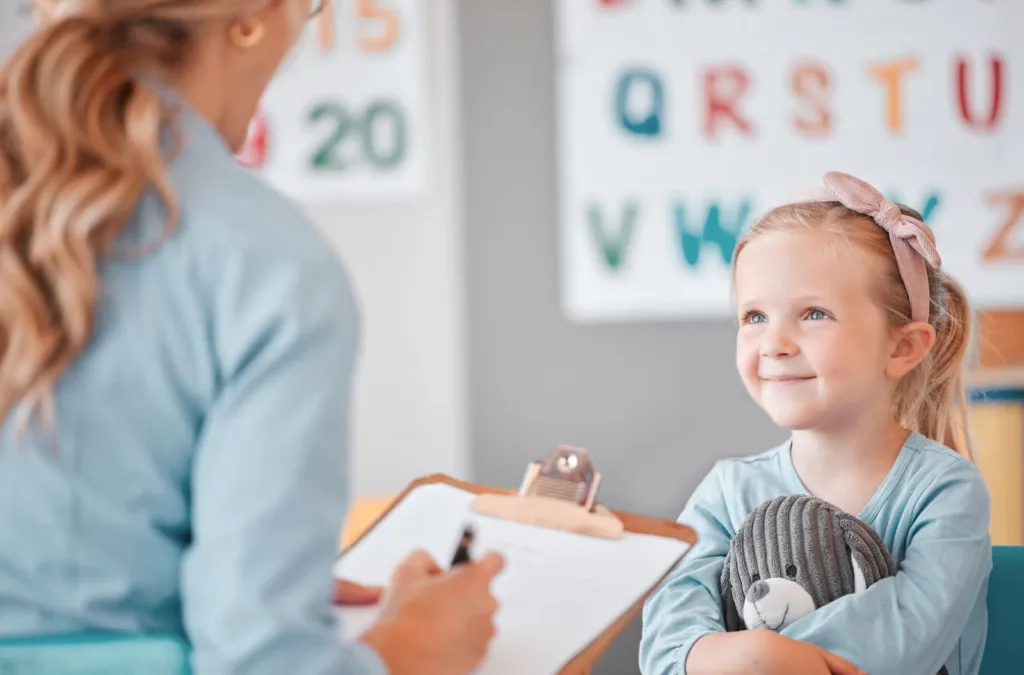
The transition from a relaxed home environment or casual toddler care to a structured elementary school classroom is one of the most significant milestones in early childhood. For many families in the Lower Mainland, this milestone brings a mix of excitement and anxiety. Parents often wonder if their four-year-old is truly equipped to handle a full day of structured learning, social negotiation, and independent routine. This is where a dedicated bridging year becomes invaluable. Enrolling your child in a high-quality central city junior kindergarten program bridges the gap between early childhood play and formal primary education.
At Surrey City Childcare, we understand that families in the Ave, Surrey, BC area need more than a simple babysitting service; they need a professional, reliable, and affordable educational launchpad. By choosing our specialized central city junior kindergarten in 12250 100 Ave, Surrey, BC V3V 2X1, Canada, you are providing your child with a structured, nurturing space designed specifically to transform pre-school hesitation into confident classroom leadership.
The True Meaning of Kindergarten Readiness
When parents think about preparing a child for school, their minds often jump straight to traditional academic skills—reciting the alphabet, counting to twenty, or writing their first name. While these cognitive milestones are undoubtedly beneficial, early childhood education specialists view school readiness through a much wider lens.
True readiness is built on a foundation of social-emotional maturity, self-regulation, and strong executive functioning. Local kindergarten teachers frequently note that they can easily teach a child their letters if that child is capable of sitting in a circle, listening to instructions, and managing their impulses. However, if a child struggles to share, cannot handle minor frustrations, or has difficulty transitioning between activities, academic learning naturally takes a backseat.
A dedicated transitional program focuses intensely on these “invisible” skills. By simulating the rhythms and expectations of a public school environment within a smaller, highly supportive setting, children learn how to function successfully as part of a larger group without feeling overwhelmed.
Social-Emotional Development: Moving From “Me” to “We”
Young toddlers are naturally egocentric, viewing the world entirely through the lens of their own immediate needs and desires. By age four, however, children are entering a crucial developmental phase where they must learn to navigate complex social spaces with their peers.
The Art of Peer Mediation
In a structured early learning classroom, every disagreement over a shared toy, every wait for a turn at the snack table, and every collaborative building project is a vital micro-lesson in citizenship. Qualified educators do not simply step in and solve problems for the children. Instead, they provide the specific vocabulary required for self-expression and conflict resolution. Phrases such as “I am using this right now, but you can have it next” or “I don’t like when you push me” become powerful tools that children carry with them into their future elementary classrooms.
Building Emotional Resilience
School readiness also involves learning how to manage disappointment and frustration. When a block tower collapses or an art project does not turn out exactly as planned, a child experiences a physiological stress response. In an advanced bridging program, teachers practice “co-regulation.” They sit with the child, acknowledge the big feeling, and coach them through calming strategies. Over time, this external scaffolding becomes internalized, allowing the child to face academic challenges with a healthy growth mindset rather than anxiety or defeat.
Cultivating Executive Function and Structured Routines
Executive function is a broad term for the brain processes that enable us to plan, focus attention, remember instructions, and juggle multiple tasks successfully. In the context of early childhood education in Canada, strong executive functioning is an exceptionally accurate predictor of long-term academic success.
The Power of Rhythmic Schedules
Children thrive when their environment is predictable. A high-quality transitional classroom does not rely on a rigid, clock-dominated schedule, but rather a consistent, rhythmic flow of the day. A typical sequence—moving from a high-energy morning arrival to a structured circle time, followed by independent exploration, a shared clean-up routine, and a quiet reflection period—helps children develop an internal sense of time and order.
When children can anticipate what comes next, their baseline anxiety drops significantly. They stop worrying about what is going to happen and instead focus completely on the learning task at hand.
Mastering Transitions
The ability to transition smoothly from a high-energy activity, such as outdoor physical play, to a calm, focused activity, like storytime, is a highly sophisticated skill. Junior kindergarten classrooms place a heavy emphasis on these transition points. Through the use of visual schedules, musical cues, and clear behavioral expectations, children learn how to calm their own bodies and prepare their minds for a shift in focus—a skill that will prove indispensable on their very first day in a larger primary school setting.
The Play-Based Cognitive Foundation: Intentional Learning
There is a common misconception that a play-based curriculum lacks academic rigor. In reality, guided, intentional play is the most sophisticated form of early education available. Children are natural scientists, driven by an innate curiosity to explore, test, and understand the world around them.
S.T.E.M. through Exploration
When you observe children engaged with a classroom water table, they are not simply splashing; they are experimenting with volume, buoyancy, and physics. When they construct elaborate structures with wooden blocks, they are actively studying geometry, spatial awareness, balance, and engineering.
Professional early childhood educators practice what is known as “scaffolded learning.” They observe these natural play interests and subtly introduce higher-level concepts. For example, if a child is fascinated by sorting colored buttons, the teacher might introduce early mathematical concepts like classification, graphing, or pattern sequencing. This approach ensures that cognitive learning remains an exciting, joy-filled adventure rather than a tedious chore, effectively preventing early academic burnout.
Emergent Literacy and Language Development
Language is the ultimate key that unlocks the wider school curriculum. Early literacy in a transitional classroom is taught through a rich linguistic environment rather than static worksheets. Group storytimes, rhyming games, phonemic awareness activities, and daily conversational exchanges build a robust vocabulary. Educators engage children with open-ended questions that require thoughtful explanation rather than simple “yes” or “no” answers. This intentional dialogue physically builds neural pathways in the developing brain, preparing the child for the reading and writing requirements of the primary grades.
Physical Literacy and Independence
A successful transition to a larger school environment also requires a certain level of physical competence and independent self-care.
Gross Motor Confidence
Physical literacy is about developing the coordination, balance, and body awareness necessary to navigate the physical world safely and confidently. Climbing, jumping, running on uneven natural surfaces, and participating in structured movement games build the core physical strength that supports overall cognitive health. Furthermore, a child who feels physically confident on the playground is far more likely to engage socially with their peers during recess.
Fine Motor Strength and Self-Care
Holding a pencil correctly, using safety scissors, and manipulating small classroom materials all require significant fine motor strength and dexterity. This strength begins with gross motor play and is refined through targeted tactile activities, such as working with modeling clay, tearing paper for art projects, and stringing beads.
Additionally, junior kindergarten classrooms encourage children to master essential self-help skills. Putting on their own shoes, zipping up winter jackets, opening lunchboxes independently, and managing their personal hygiene are critical milestones. When a child can take care of their own physical needs, they feel a deep sense of autonomy and pride, entering their new school setting as a capable, self-sufficient individual.
Navigating the Choice: A Guide for Local Parents
When evaluating local options for early childhood education, it is vital to look beyond basic convenience and investigate the quality of the interactions occurring within the center. As you search for a professional daycare near me to support your family’s needs, consider using the following professional benchmarks during your visits:
- Teacher Engagement: Observe how the educators interact with the children. Do they drop down to eye level when speaking? Is their tone calm, respectful, and encouraging?
- Classroom Environment: Is the space clean, well-organized, and filled with open-ended learning materials, or is it cluttered and overstimulated with electronic toys?
- Licensing and Standards: Ensure the facility is fully licensed and compliant with all local health and safety regulations, demonstrating a clear commitment to professional accountability.
- Parent-Teacher Partnership: Look for a center that views early education as a collaborative journey, offering transparent updates on your child’s developmental goals.
Frequently Asked Questions (FAQs)
What is the main difference between a standard preschool and a junior kindergarten program?
While both programs focus on early childhood development, a junior kindergarten curriculum is specifically tailored as a transitional program for four-year-olds. It introduces a more structured daily rhythm, places a higher emphasis on advanced social mediation, and aligns closely with the foundational expectations of primary schools to ensure school readiness.
How do educators handle severe separation anxiety during the first few weeks?
Separation anxiety is a completely natural developmental response. Professional educators manage this by establishing brief, consistent goodbye rituals and utilizing comfort techniques or transition objects from home. Because our staff is highly trained in emotional co-regulation, we focus on making the drop-off routine a safe, reassuring experience for both the child and the parent.
What is the typical response time if I have questions about enrollment or waitlists?
We understand that securing reliable, high-quality care is a time-sensitive priority for busy families. Our dedicated administrative team makes it a point to respond to all enrollment inquiries, schedule requests, or waitlist questions within one to two business days, ensuring clear and efficient communication.
Are your programs fully accessible to families living outside the immediate neighborhood?
Yes. While our primary facility is centrally located in North Surrey, our programs are easily accessible to commuting families across the city, including those looking for premium care from nearby communities such as Guildford, Fleetwood, and Whalley.
Conclusion / Final Thoughts
The early childhood years represent a brief, golden window of opportunity to ignite a lifelong love for discovery. Investing in a dedicated transitional year is one of the most reassuring gifts you can give your young learner, ensuring they enter the public school system not with anxiety, but with an adventurous spirit and a deep sense of personal capability.Choosing the right partner for this educational journey requires a thoughtful balance of logic and intuition. You want a facility that meets the highest professional safety standards, but you also want a community where your child feels uniquely loved, seen, and valued.
At Surrey City Childcare, we are honored to stand as that perfect balance for families on Ave, Surrey, BC. Our passionate team is committed to delivering the absolute best central city junior kindergarten experience, working alongside parents to ensure a smooth, celebratory, and completely successful leap into the primary grades. When children are provided with an expert educational launchpad, a nurturing environment, and a secure foundation, their future potential is truly limitless.