
Quick Summary
- Prioritizing Immature Immune Systems: Choosing high-quality childcare for infants requires a strict assessment of environmental safety and hygiene protocols to protect babies from common community illnesses.
- Deciphering Regulatory Standards: Fraser Health mandates definitive, multi-stage cleaning and disinfection cycles that licensed operators must strictly execute throughout the day.
- Evaluating High-Touch Zones: Safe early learning centers maintain detailed sanitization logs for specialized areas like diaper-changing stations, crib mattresses, and mouthing toys.
- Navigating Scheduling & Accessibility: Understanding the strict distinctions between traditional day spaces and shift-friendly options ensures families choose the right operational care model.
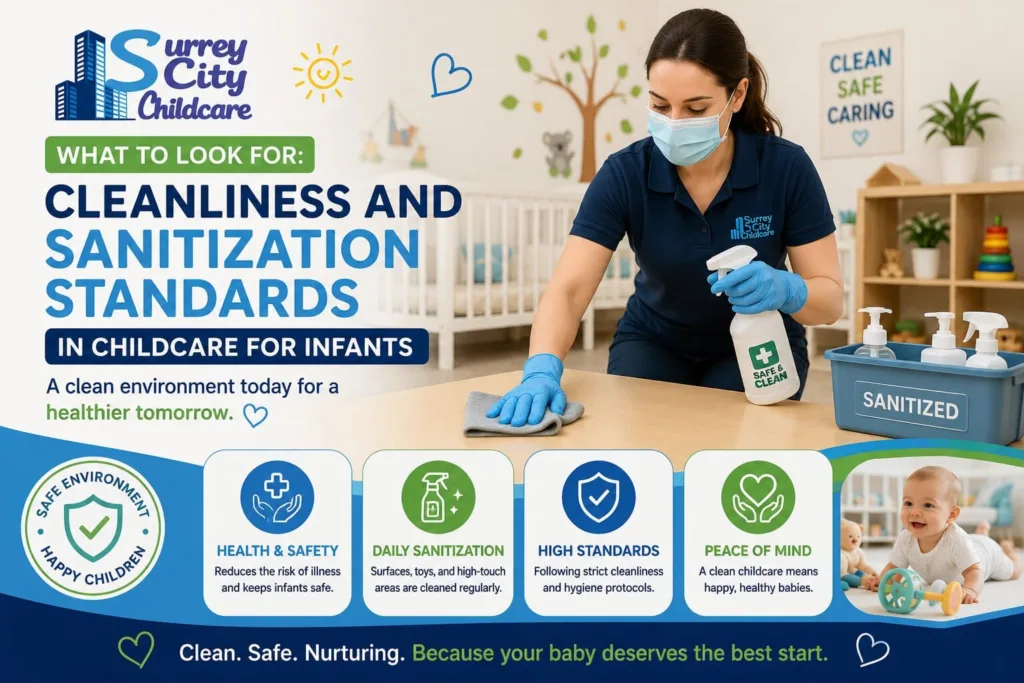
Returning to work after maternity or parental leave is a profoundly emotional transition for any family in the Lower Mainland. While your initial thoughts might center around finding an environment filled with warm educators, soft lighting, and developmental toys, the most foundational component of early child care is environmental health. Because an infant’s immune system is still actively developing, they are uniquely susceptible to everyday environmental pathogens and viruses. When families begin shortlisting potential centers, looking for specialized, accredited childcare for infants means looking far beyond simple tidy shelves or clean floors. It requires a deep dive into the invisible infrastructure of infection control, chemical choices, and strict routine hygiene schedules.
As a trusted, family-focused local partner, Surrey City Childcare provides services explicitly engineered to meet and exceed the province’s most rigorous public health standards. Nestled in a highly accessible central corridor at 12250 100 Ave, Surrey, BC V3V 2X1, Canada, our professional nursery space prioritizes absolute environmental transparency, giving parents total peace of mind while protecting the wellness of our community’s youngest learners.
The Vulnerability of the Infant Nursery: Why Hygiene Comes First
Infants interact with their world through intense sensory exploration. Unlike older preschoolers who can be coached to wash their hands or avoid putting common items in their mouths, a baby under twelve months old will naturally grasp, pull, chew, and taste almost every physical object within arm’s reach. This hand-to-mouth exploration is a beautiful, necessary stage of cognitive development, but it also creates an easy vector for cross-contamination. Fraser Health mandatory sanitization provides the critical protection needed to interrupt this path between object contamination and immature immune exposure.
Furthermore, infants do not possess the fully developed immune systems of adults or older children. A mild seasonal cold that an adult might easily brush off can quickly turn into a significant health challenge for a tiny baby, causing disruptions to sleep patterns, nutrition, and respiratory health. Therefore, when evaluating daycares in surrey, your absolute primary screening criteria must be the center’s written infection prevention and control (IPAC) policy. A professional facility will always treat hygiene not as an occasional chore, but as a continuous, daily cycle integrated directly into their early education framework.
Deconstructing the Fraser Health Sanitization Mandate
In British Columbia, group child care operations are governed by the strict regulations enforced by the regional health authority. For families residing across the local community, Fraser Health licensing officers conduct unannounced, meticulous physical audits to ensure facility operators uphold public safety laws.
When analyzing a center’s cleanliness, it is important to understand that “cleaning,” “sanitizing,” and “disinfecting” are distinct scientific processes under provincial health rules:
1. Cleaning (The First Line of Defense)
This involves the physical removal of visible organic matter, dirt, food, and debris from a surface using plain water and mild detergent. Cleaning does not necessarily kill pathogens, but it reduces their numbers and removes the organic material that shields viruses from sanitizing chemicals.
2. Sanitizing (Reducing Microbial Loads)
Sanitizing lowers the number of bacteria on a surface to safe levels, as determined by public health codes. This step is typically applied to surfaces that come into direct contact with food or mouths, such as high-chair trays and plastic toys.
3. Disinfecting (Eliminating Pathogens)
This process utilizes specific, hospital-grade chemical compounds to completely destroy target viruses and fungi. Disinfection is mandatory for high-risk bodily fluid areas, such as diaper-changing pads, child-sized toilets, and washroom sinks.
A high-quality facility will utilize commercial-grade sanitizing solutions mixed to exact parts-per-million (PPM) specifications, testing the mixtures daily with chemical test strips to guarantee effectiveness without introducing chemical residue risks to sensitive infant skin.
The Diaper-Changing Station Checklist: Zero Tolerance for Cross-Contamination
The diaper-changing area is the most critical zone for potential cross-contamination in any nursery. A licensed, high-quality day care surrey facility must enforce a flawless, non-negotiable step-by-step cleaning sequence after every single diaper change. This cycle begins with a physical clean, followed by spraying an approved disinfectant, allowing the mandated contact time, and concluding with a safe hand washing routine.
When touring a center, look closely at the physical setup of the changing zone. A compliant station must feature:
- A completely smooth, non-porous, waterproof changing pad that is entirely free of structural tears, cracks, or seams where bacteria can hide.
- A dedicated handwashing sink located immediately adjacent to the table, equipped with hands-free electronic sensors or foot-pedal faucets so educators do not have to touch taps with contaminated hands.
- Separate, clearly labeled spray bottles containing fresh cleaning solution and hospital-grade disinfectant mixed to precise provincial specifications.
- A strict requirement that the disinfectant spray remain wet on the changing pad for the exact manufacturer-recommended contact time (often 1 to 2 minutes) to ensure pathogens are completely eliminated before the next infant is placed on the table.
The Toy Management System: The “Three-Bucket” Protocol
Because infants naturally mouth toys, a premium nursery space cannot simply leave toys scattered in general play bins all day long. When hunting for the best day care for infants, parents should look for an explicit, active system for isolating contaminated play items.
Accredited facilities use a strict “Three-Bucket System” or an insulated “Yuck Bucket” protocol. The moment an educator notices a baby has chewed, drooled on, or mouthed a plastic block, fabric rattle, or textured ball, that item must be immediately removed from the general floor space and placed inside a secure, labeled container out of reach of the children. Compliant nursery protocols rely on immediate isolation of mouthed toys, non-porous cleanable play surfaces, and visual, signed daily cleaning logs. Conversely, sub-standard care warning signs include toys left in the common area all day, plush toys that cannot be washed, and a complete absence of written chemical tracking sheets.
At the end of the day, or during nap cycles, these isolated toys must go through a complete three-stage sanitization process: washed with warm soapy water, rinsed clean with fresh water, immersed in an approved sanitizing bath, and then left to air-dry completely on clean racks.
Sleep Environments and Crib Hygiene Standards
Safe sleep practices extend far beyond preventing physical hazards; they include maintaining pristine environmental health around cribs and linens. Infants spend a large portion of their day resting, making their sleep environments a major focal point for overall health.
Provincial licensing regulations mandate that every infant enrolled in group care must be assigned their own dedicated crib with a firm, waterproof mattress. Sharing crib space or mattresses between different infants during staggered sleep schedules is a significant health violation. Furthermore, crib sheets must be laundered weekly at a minimum, or immediately if they become soiled by spit-up or diaper leaks. The crib bars, frames, and mattress surfaces must be wiped down regularly with safe, non-toxic disinfectants to ensure the air your baby breathes while resting remains clean and free of airborne mold spores or dust mites.
Balancing Operations: Exploring Varied Childcare Frameworks
Every family across the Lower Mainland balances unique career realities, varying commute times, and diverse shift schedules. Finding a healthy, pristine space means matching your domestic schedule with the right local operational model.
1. Traditional Daytime Care Group Centers
For the vast majority of parents working regular office hours or hybrid corporate schedules, choosing an organized, daylight group care center provides the ultimate structural stability. These operations possess the dedicated administrative staff needed to oversee cleaning rotations, handle continuous facility upgrades, and document strict safety protocols without taking away from direct, face-to-face child interaction.
2. Exploring Alternative Extended Care Options
For frontline medical workers, emergency responders, or shift-based professionals, traditional daytime hours do not always fit. When searching for specialized shift care, phrases like 24 hour daycare for infants or 24 hour infant daycare frequently appear in online searches. While traditional around-the-clock group care centers are exceptionally rare in BC due to strict provincial overnight licensing mandates, home-based or specialized shift models do exist to assist non-traditional workers. If your schedule requires an extended hours format, you must be even more diligent about checking their licensing status. Ensure that night-shift environments maintain the exact same sanitization metrics, air filtration standards, and crib safety tracking protocols as standard daytime programs.
3. Locating Accessible, Budget-Conscious Care
Managing family finances in the Lower Mainland can feel daunting, leading many families to type affordable daycare for infants or affordable daycare for infants near me into search engines. True affordability, however, should never come at the cost of safety or health. Reputable centers achieve affordability not by cutting corners on high-quality sanitization supplies or certified staff ratios, but by actively participating in provincial funding programs like the Child Care Fee Reduction Initiative (CCFRI) and the Affordable Child Care Benefit (ACCB). This allows parents to access premium, clinically clean spaces while keeping out-of-pocket costs entirely manageable.
Frequently Asked Questions
How can a parent verify if a Surrey childcare provider follows Fraser Health sanitization rules?
You can easily review a center’s historical compliance records by visiting the official Fraser Health Community Care Facility Licensing public portal. This database lists every unannounced inspection report, noted infractions, and the corrective actions taken by the provider over the past several years, allowing you to check their safety record before enrolling.
Are the cleaning chemicals used in an infant nursery safe for sensitive baby skin?
Yes. Professional centers use government-approved, non-toxic sanitizing solutions that break down safely without leaving harmful chemical residues. Additionally, high-contact items like high-chair trays and mouthing toys are thoroughly rinsed with clean water or left to air-dry completely, ensuring that no active chemical traces come into contact with your child’s skin or mouth.
What is your administrative response time for local families checking space availability?
Our central enrollment office handles all local inquiries, facility tour bookings, and waitlist updates within one to two business days. We prioritize prompt, clear communication so families can effectively plan their maternity leave timelines and return-to-work transitions without unnecessary stress.
Do your professional early childhood services cover all neighborhoods in the Surrey area?
Yes. Our centrally situated facility is purposefully designed to serve families across all surrounding regional sectors, including Whalley, Guildford, Fleetwood, Newton, and North Surrey. Our close proximity to primary transit links and major local roads makes our center a highly convenient drop-off and pick-up destination for busy commuting parents.
How does a licensed infant program handle sudden outbreaks of common childhood illnesses?
When a communicable illness (such as hand-foot-and-mouth disease or a stomach virus) is identified, licensed centers activate an enhanced outbreak protocol. This includes isolating the ill child immediately until a parent arrives, increasing the frequency of all chemical sanitization cycles, removing all soft fabric items from the floor, and immediately reporting the surge to a Fraser Health licensing officer for professional guidance.
Final Thoughts: Securing a Healthy, Trustworthy Foundation
Selecting the right early childhood center is about finding a dedicated community that treats your baby’s health, safety, and physical well-being with absolute professional reverence. By using strict regulatory benchmarks—such as separate handwashing sinks, dedicated crib assignments, and organized toy sanitization logs—as your checklist, you can easily filter out sub-standard options. Protecting your child from environmental pathogens while fostering a warm, stimulating, and play-based environment is a delicate balance, but finding the right local partner makes all the difference.
As a highly reliable, customer-focused, and professional organization, Surrey City Childcare provides services rooted in strict health compliance, transparent daily tracking, and exceptional early childhood education. Operating out of our modern facility at 12250 100 Ave, Surrey, BC V3V 2X1, Canada, our certified early learning team manages every detail of the sanitization and care process with complete professional care. Reach out to our admissions office today to book a personal interactive tour of our nursery, check our daily sanitization logs, and secure a safe, immaculately clean, and nurturing childcare for infants where your little one can safely grow and thrive.