
Quick Summary
- Seasonal Health Benchmarks: Discover the rigorous hygiene and sanitization standards that protect young children during the autumn respiratory illness peak in childcare in surrey bc.
- Understanding Exclusion Policies: Learn when toddlers must stay home and understand the medical criteria governing safe return-to-care schedules.
- Proactive Classroom Disinfection: Explore how licensed centres use non-toxic, hospital-grade sanitizers, continuous toy rotation, and advanced indoor ventilation to stop cross-contamination.
- Building Lifelong Hygiene Habits: See how early childhood educators teach proper handwashing, cough etiquette, and sensory hygiene through interactive songs and daily classroom routines.
- Strengthening Toddler Immunity: Find actionable advice on seasonal nutrition, hydration, restorative sleep patterns, and daily outdoor movement to support developing immune systems.
As the autumn leaves begin to turn across British Columbia, families throughout the Lower Mainland prepare for the familiar shift toward cooler weather, rainier mornings, and new school year routines. Alongside the excitement of back-to-school season comes an inevitable reality for parents of toddlers and preschoolers: the start of the autumn cold and flu season. For families utilizing childcare in surrey bc, understanding how early learning environments manage illness, maintain sanitization, and safeguard group health is critical for peace of mind. Group care provides incredible social and cognitive benefits, but it also means young children share toys, surfaces, and close spaces while their immune systems are still learning to fight off common community viruses.
Finding a care provider that treats daily hygiene with the highest standard of professionalism makes all the difference in keeping your household healthy. As a dedicated local service provider, Surrey City Childcare delivers reliable, affordable, and professional early learning programs at 12250 100 Ave, Surrey, BC V3V 2X1, Canada, offering families in Whalley, Guildford, Newton, and nearby neighborhoods a secure, clean setting. By partnering with certified Early Childhood Educators who strictly implement provincial health guidelines, parents can navigate the autumn season with confidence, knowing their children are protected by proactive wellness protocols.
The Reality of Toddler Immune Systems in Group Settings
To understand why health policies exist in early childhood education, it helps to examine how a toddler’s immune system develops. Young children are immunological beginners. According to pediatric health experts, it is entirely normal for a toddler or young preschooler to experience six to ten upper respiratory infections or viral colds during their first few years in group care.
The Developing Immune System
When infants and toddlers transition from their home environment into a vibrant daycare in surrey bc, their bodies encounter common community microbes for the very first time. Each mild cold prompts the child’s immune system to produce antibodies, gradually building long-term immunity that will protect them throughout their primary school years.
However, because toddlers explore their physical world through touch and oral exploration, they frequently put toys in their mouths, wipe their noses with their hands, and sneeze without covering their faces. This natural developmental behavior requires licensed child care centres surrey bc to maintain layered sanitation practices that minimize viral spread without disrupting essential hands-on play.
Differentiating Common Colds, Seasonal Flu, and RSV
Early childhood educators and parents work closely together to monitor symptoms and distinguish minor sniffles from more serious viral infections:
- Common Cold (Rhinovirus): Gradual onset featuring a runny nose with clear or cloudy mucus, mild sneezing, a low-grade temperature, and normal energy levels.
- Seasonal Influenza (Flu): Sudden onset accompanied by high fever, noticeable fatigue, muscle aches, chills, dry cough, and reduced appetite.
- Respiratory Syncytial Virus (RSV): Wheezing, persistent coughing, labored or rapid breathing, nasal congestion, and irritability, which require closer observation in infants and toddlers.
- Gastrointestinal Bugs (Norovirus/Rotavirus): Rapid onset of vomiting, watery diarrhea, abdominal cramping, and elevated risk of dehydration.
Recognizing these distinctions helps educators communicate clearly with parents, ensuring children receive appropriate rest at home when contagious illnesses arise.
Daily Hygiene and Sanitization Standards in Licensed Care
A robust defense against seasonal illness begins with consistent, systematic sanitation. High-calibre facilities operate on comprehensive cleaning checklists that address physical surfaces throughout the entire day rather than just a quick sweep at closing time.
Non-Toxic, Multi-Tiered Disinfection
In a quality preschool in surrey bc, cleaning involves a precise two-step process: cleaning followed by sanitizing or disinfecting. First, surfaces are cleaned with warm water and detergent to physically remove dirt, organic matter, and grease. Next, an approved, child-safe, hospital-grade disinfectant is applied and allowed to sit for the required contact time to neutralize lingering pathogens.
- High-Touch Points: Door handles, light switches, faucet knobs, toilet flush levers, handrails, and check-in tablets are disinfected multiple times daily.
- Activity Furniture: Sensory water tables, easels, craft tables, and lunch chairs are sanitized between each group transition.
- Rest Equipment: Sleeping mats and cot surfaces are assigned to individual children, disinfected daily, and spaced apart to maintain safe airflow during naptime.
The “Yuck Bin” Toy Sanitization System
Toddlers naturally explore objects by mouthing them. To maintain hygiene without stopping child-led exploration, classrooms utilize designated “mouthing bins” or “yuck buckets.” The moment a toddler places a plastic block, wooden animal, or dramatic play utensil in their mouth, educators gently redirect the child and place the item directly into a separate bin away from peer reach. At scheduled intervals and at the end of every afternoon, all collected toys undergo hot water washing, non-toxic sanitizing baths, and thorough air-drying before returning to classroom shelves.
Indoor Air Quality and Ventilation
Proper air circulation is one of the most effective methods for reducing airborne respiratory droplets. Modern daycare surrey bc facilities prioritize healthy airflow by maintaining commercial HVAC systems with high-efficiency filters, opening windows to encourage cross-ventilation when weather permits, and utilizing HEPA air purifiers in sleep areas and busy activity rooms. Continuous fresh air exchange keeps airborne viral loads low, supporting respiratory health during damp West Coast autumns.
Establishing Healthy Habits: Teaching Toddlers Hygiene
While staff maintain facility sanitation behind the scenes, children learn essential personal hygiene habits that will serve them for a lifetime. In a dynamic city preschool, educators turn hygiene routines into joyful, engaging learning opportunities.
The 20-Second Handwashing Routine
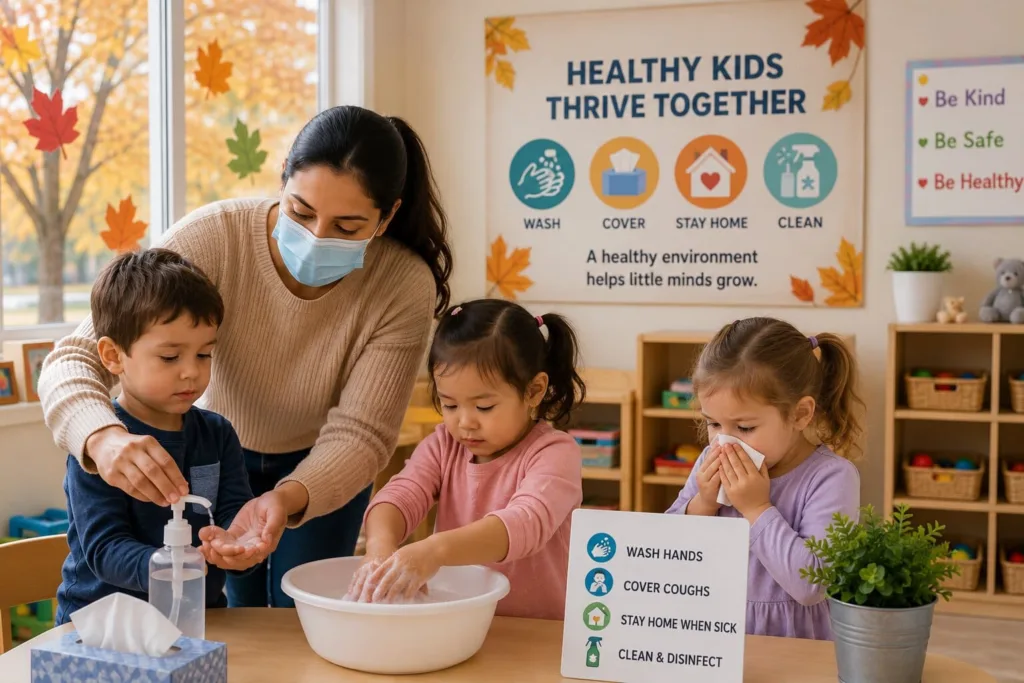
Handwashing with warm running water and soap remains the single most effective barrier against viral transmission. Educators teach children how to clean every part of their hands, including the backs, between the fingers, and under the fingernails. Rather than treating handwashing as a rushed chore, teachers use catchy songs like “Twinkle, Twinkle, Little Star” or custom classroom rhymes that last the full recommended 20 seconds. Handwashing is built into every natural transition point:
- Immediately upon arriving at the centre in the morning.
- Before and after eating morning snack, lunch, and afternoon snack.
- After using the washroom or having a diaper change.
- Immediately after returning from outdoor playground time.
- After blowing noses, coughing, or sneezing.
- After handling sensory play materials, soil, or messy art supplies.
Sneeze and Cough Etiquette
Young toddlers often instinctively cough straight ahead. Early childhood teachers use visual modeling, dramatic storytelling, and interactive games to teach the “vampire cough”—tucking the nose and mouth into the inner crook of the elbow. Children learn that using their elbow keeps their hands clean for playing, protecting their friends and educators from airborne germs.
Clear Health Policies: Illness Exclusion and Return Guidelines
To maintain a healthy learning community, licensed centres operate under transparent illness policies aligned with Fraser Health Authority and the BC Centre for Disease Control (BCCDC). These policies provide parents with clear, objective rules regarding when a child must stay home.
When Must a Child Stay Home?
A well-defined sickness policy prevents the rapid spread of illness across classrooms. In a high-quality preschool surrey environment, children must remain in the comfort of their home if they exhibit any of the following symptoms:
- Fever: A temperature of 38.0°C (100.4°F) or higher. Children must be fever-free for a full 24 hours without the use of fever-reducing medication like acetaminophen or ibuprofen before returning.
- Vomiting or Diarrhea: Two or more episodes within 24 hours. The standard health guideline requires children to be symptom-free for 48 hours following the last episode before resuming care.
- Persistent Cough or Breathing Distress: A severe, productive cough that interferes with the child’s ability to sleep, play, or eat comfortably.
- Undiagnosed Skin Rashes: Any spreading rash or skin lesion that has not been evaluated and cleared in writing by a qualified healthcare professional.
- Eye Infections: Thick yellow or green discharge accompanied by redness, swelling, or crustiness (suspected conjunctivitis), requiring 24 hours of antibiotic treatment prior to return.
- General Malaise: A child who is unusually lethargic, irritable, crying continuously, or unable to participate comfortably in regular indoor and outdoor daily activities.
The Role of Clear Communication During Outbreaks
When multiple cases of a communicable illness (such as Hand, Foot, and Mouth Disease, chickenpox, or gastrointestinal bugs) are identified in a room, prompt notification is sent to all enrolled families. This transparent reporting outlines specific symptoms to watch for at home, the date of initial exposure, and preventive measures being implemented, allowing parents to monitor their toddlers proactively.
Nutrition, Hydration, and Lifestyle: Boosting Toddler Immunity
Classroom hygiene represents only half of the wellness equation; supporting a child’s internal immune defense through proper lifestyle habits is equally essential. Families attending full day childcare surrey bc benefit when home routines and classroom nutrition work hand in hand.
Immune-Supporting Nutrition
A balanced diet full of colorful, nutrient-dense foods gives a growing body the building blocks to fight off infections. Classrooms following Canada’s Food Guide emphasize:
- Vitamin C: Bell peppers, broccoli, strawberries, oranges, and cantaloupe to support white blood cell function.
- Zinc and Iron: Lean meats, lentils, beans, chickpeas, and fortified whole grains for cellular repair and enzyme production.
- Probiotics: Plain yogurt and fermented dairy items that nurture a healthy gut microbiome, which houses the majority of the body’s immune cells.
- Continuous Hydration: Offering fresh water throughout the day keeps mucous membranes in the nose and throat hydrated, allowing them to trap and expel viruses effectively.
Rest, Predictable Sleep Routines, and Recovery
Adequate, uninterrupted sleep is the time when the body produces cytokines—proteins that help target infection and inflammation. Toddlers and preschoolers require between 10 and 13 hours of total sleep per day, including daytime naps. Maintaining regular bedtime routines at home and peaceful, dimly lit rest periods during daycare surrey hours ensures that young bodies recharge fully.
Embracing Rainy West Coast Outdoor Play
There is a long-standing myth that being outside in cool or rainy weather causes colds. In reality, respiratory viruses thrive indoors where air is recirculated and people are in close physical contact. Spending time outside in fresh air improves lung capacity, stimulates lymphatic circulation, and lowers stress hormones. High-quality programs embrace daily outdoor play in all weather, ensuring children wear proper raincoats, boots, and warm layers to jump in puddles and explore nature safely.
Partnering with Parents for a Smooth Season
Navigating the winter illness peak requires close collaboration, mutual empathy, and clear communication between educators and families.
Practical Tips for Parents
- Create a Backup Care Plan: Sickness happens unexpectedly. Arrange trusted family members, friends, or flexible work arrangements ahead of time so emergency sick days feel less stressful.
- Keep Contact Information Updated: Ensure emergency contact phone numbers and authorized pickup lists are always current with your child care administration.
- Pack Extra Weather-Appropriate Clothes: Autumn mornings can be chilly while afternoons bring heavy rain. Pack at least two full changes of labelled seasonal clothes, extra socks, and water-resistant outer layers in your child’s cubby.
- Communicate Morning Observations: If your toddler had a restless night, mild congestion, or a slightly reduced appetite, let the educators know at morning drop-off so they can provide gentle, attentive support.
By approaching the season with proactive hygiene, clear health boundaries, and open dialogue, families and educators build a resilient community where children stay safe, happy, and ready to learn.
Sickness Protocol Checklist for Parents
When deciding whether to send your child to daycare north surrey bc or keep them home to rest, ask yourself these essential questions:
- Has my child had a fever over 38.0°C in the last 24 hours without medication?
- Is my child experiencing vomiting, nausea, or diarrhea?
- Does my child have an unexplained skin rash or goopy eye discharge?
- Is my child too tired or uncomfortable to engage happily in outdoor play and group learning?
- Does my child require one-on-one comfort that cannot be reasonably provided in a group classroom?
If you answered “Yes” to any of these questions, a quiet day of rest and recovery at home is the best choice for your child’s wellbeing and the health of their classmates.
Frequently Asked Questions
How do early childhood educators clean sensory bins and shared craft materials during cold and flu season?
Sensory bins with porous or organic materials like dried beans, rice, or playdough are assigned to individual small groups and discarded regularly if contamination occurs. Non-porous sensory materials like water play tables, plastic funnels, and measuring cups are emptied, washed, and sanitized daily with non-toxic sanitizing solutions before being refilled.
What is the typical administrative response time when families submit tour or program inquiries?
Our administrative team strives to respond to all enrollment inquiries, phone messages, and tour requests within one to two business days. We provide complete details regarding program openings, age groupings, daily schedules, and our health and safety manuals.
Which geographic neighborhoods and areas in Surrey do your programs cover?
Conveniently located at 12250 100 Ave, our centre provides accessible, high-standard care for families across Surrey and surrounding regions. We regularly welcome children from Whalley, North Surrey, Guildford, Fleetwood, Newton, and South Surrey, offering quick access for parents commuting along major transit and roadway routes.
What happens if a child develops a fever or becomes sick during the middle of the school day?
If a child develops a fever or displays communicable symptoms during the day, they are gently brought to a quiet, comfortable resting area where an educator provides one-on-one care and reassurance. Staff immediately contact the parents or designated emergency contacts to arrange a prompt pickup within one hour, protecting the sick child and their classroom peers.
Final Thoughts: Prioritizing Health, Safety, and Nurturing Care
The fall season brings wonderful opportunities for young children to explore seasonal changes, celebrate community events, and build lifelong friendships. By maintaining uncompromising sanitization routines, proactive illness exclusion guidelines, healthy nutrition, and daily outdoor exploration, quality early childhood facilities ensure that children continue to learn and grow in a secure, hygienic space. High-standard childcare in surrey bc focuses on protecting every child’s physical health while cultivating curiosity, emotional resilience, and joy every single day.
As an affordable, trustworthy, and professional service provider, Surrey City Childcare remains deeply committed to safeguarding the wellness of our young learners. Our facility at 12250 100 Ave, Surrey, BC V3V 2X1, Canada provides a warm, modern environment guided by certified Early Childhood Educators who place safety, cleanliness, and individualized care at the heart of daily routines. We invite you to reach out to our welcoming team today to schedule a personal facility tour, review our health and safety procedures, and find the perfect early learning program for your family.