
Summary
- Understanding toddler behavior in childcare begins with recognising that young children communicate through their actions rather than fully developed verbal skills.
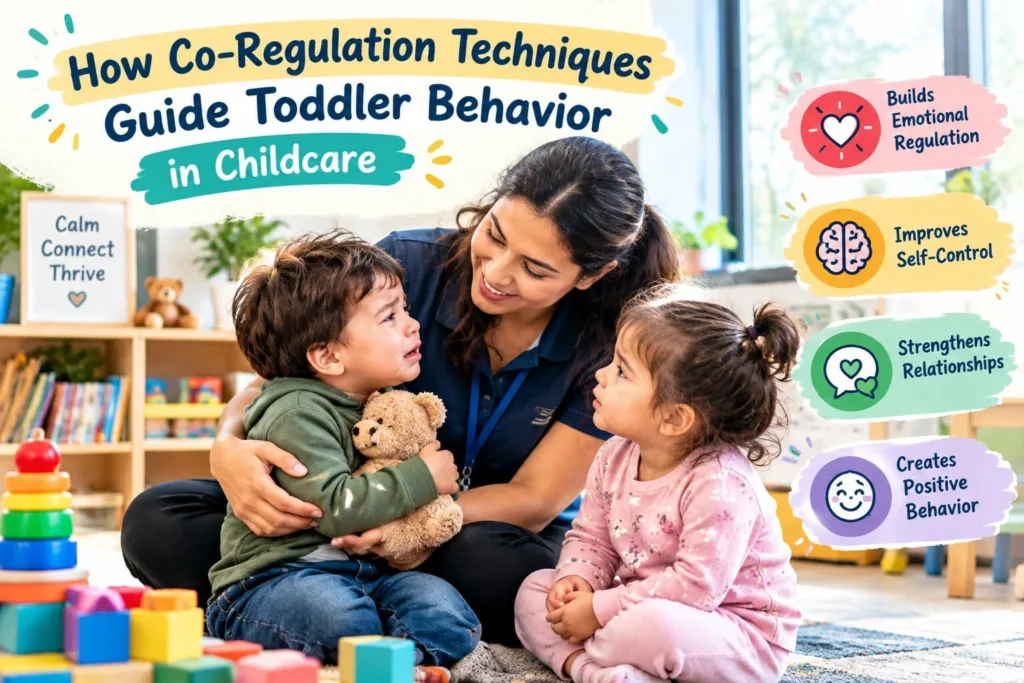
- Co-regulation serves as the essential bridge where compassionate adults provide the external calm necessary for children to build internal emotional control.
- Certified educators use intentional body language, calm voice tones, and proactive environmental adjustments rather than isolation or punishments.
- Establishing predictable daily schedules and gentle transitions prevents sensory overwhelm and reduces challenging classroom incidents.
- Surrey City Childcare integrates responsive guidance into daily routines, helping local children develop lifelong social-emotional stability and confidence.
Watching a toddler navigate a room full of peers, colourful toys, and dynamic learning stations is a remarkable window into early human development. Between twelve and thirty-six months of age, children experience a burst of curiosity paired with an intense desire for autonomy. However, their neurological development is still catching up to their big feelings.
At Surrey City Childcare, located at 12250 100 Ave, Surrey, BC V3V 2X1, Canada, our dedicated early childhood team understands that positive guidance begins by examining the roots of toddler behavior in childcare. Rather than expecting young toddlers to possess adult levels of patience, sharing abilities, or self-control, skilled educators across our Pre-School Program and toddler classrooms step in as calm emotional anchors through the practice of co-regulation.
Have questions about your little one’s daily development? Reach out to the team at Surrey City Childcare to see how our educators support healthy toddler behavior every day..!

Decoding the Toddler Brain: Why Self-Regulation Starts with Connection
To support a struggling child, parents and educators must first look at neurological development. The prefrontal cortex—the region of the human brain responsible for impulse control, planning, emotional regulation, and rational decision-making—is in its earliest stages of formation during toddlerhood. Meanwhile, the amygdala, the brain’s emotional alert system, is fully reactive.
When a two-year-old child experiences frustration because another child picked up the yellow dump truck first, their nervous system perceives this as an urgent crisis. A physical reaction follows instantly: crying, toy snatching, stomping, or even biting.
Young children cannot simply decide to calm down on command because they do not yet possess the internal tools to do so. This is where emotional regulation in toddlers must be cultivated from the outside in. Co-regulation is the warm, responsive process by which a trusted adult provides their own calm nervous system for the child to lean on. Through reassuring proximity, steady eye contact, and soothing voice tones, an educator sends signals of safety that help de-escalate the child’s internal stress response. Over time and with repeated practice, co-regulation transforms into genuine self-regulation.
The Contrast Between Traditional Discipline and Co-Regulation
For generations, conventional behavioral guidance relied heavily on isolation and behavioral control. Time-out corners, stern reprimands, and taking away privileges were standard responses. Modern child psychology and early childhood educational research demonstrate that these methods often create heightened anxiety rather than true understanding.
When an overwhelmed toddler is sent away to sit alone, their brain interprets this isolation as emotional abandonment during a moment of intense panic. While the child may quiet down out of fear or compliance, they have not learned how to process the underlying sensation of anger or jealousy.
In a high-quality setting dedicated to early childhood social emotional development, educators replace punitive isolation with intentional connection. Instead of sending a child away to a corner, a skilled educator brings the child close through a technique known as “time-in.”
The educator sits alongside the child at eye level, acknowledging their feelings with validating statements such as, “You really wanted that shovel. It is so hard to wait when you are ready to dig.” This approach accomplishes three critical goals:
- It keeps the child physically safe from injuring themselves or peers.
- It labels the emotion, building crucial vocabulary for expressive language.
- It demonstrates that big emotions are not dangerous, bad, or reasons to lose a caregiver’s love.
Practical Co-Regulation Techniques Used by Certified Educators
Navigating a group classroom with a dozen energetic toddlers requires proactive planning and deep patience. When managing challenging toddler behavior, certified early childhood educators rely on several evidence-based strategies:
1. Modulating Voice Tone and Physical Posture
When a child is shouting, an adult’s natural instinct might be to raise their own voice to be heard. Skilled educators do the exact opposite. They drop their voice to a soft, grounding whisper and lower their physical body below the child’s eye level. By opening their shoulders and displaying relaxed hands, educators communicate physical safety. Children naturally synchronize their breathing and nervous system energy with the adults around them.
2. Labeling and Validating Big Feelings
Toddlers often lash out simply because they lack the expressive speech to say, “I am exhausted, the room is loud, and I feel overwhelmed.” Educators utilize positive guidance techniques for toddlers by narrating what they observe: “I see clenched hands and tears. You feel frustrated right now. I am right here with you while you let that out.” Naming an emotion activates the thinking portion of the brain, allowing emotional de-escalation to begin.
3. Proactive Redirection Over Forceful Demands
Telling a toddler “Stop running!” or “Don’t throw blocks!” requires their developing brain to process a negative command, stop an ongoing action, and formulate an acceptable alternative on their own. Effective educators frame guidance positively by providing an immediate, constructive outlet: “Blocks are for building on the carpet. Let’s roll this soft ball together instead.”
4. The Power of Sensory Calming Corners
Classrooms designed for toddlers feature quiet sensory nooks equipped with soft floor pillows, weighted plush toys, liquid sensory timers, and board books about feelings. These spaces are never used as a punishment. Instead, they are comfortable, welcoming retreats where children can choose to sit with an educator, listen to soft instrumental melodies, and use deep breathing games like “smelling the flower and blowing out the birthday candle” to reset their sensory systems.
Environmental Design: Preventing Meltdowns Before They Begin
While responsive co-regulation handles active meltdowns, an exceptional childcare environment focuses heavily on prevention. Thoughtful classroom organization substantially reduces daily behavioral conflict:
- Clear, Predictable Visual Routines: Toddlers experience less stress when they know what is coming next. Visual schedule boards with clear photographs illustrate the progression of the day: arrival, circle time, free inquiry, hand washing, lunch, naptime, outdoor discovery, and pickup.
- Gentle Transitions with Audio Cues: Abruptly stopping an engaging play activity to wash hands is a prime trigger for toddler resistance. Educators introduce five-minute and two-minute warnings using rhythmic cleanup songs, gentle chime bells, or fun movement games that turn transitions into cooperative play.
- Duplication of High-Demand Toys: Expecting two-year-olds to share selflessly is developmentally unrealistic. Quality centres keep multiple sets of popular sensory bins, push carts, and wooden vehicles readily available so parallel play can flourish without immediate competition.
- Balancing Active and Quiet Exploration: A daily rhythm that alternates high-energy outdoor exploration with quiet tactile table play ensures that children expend physical energy without reaching sensory exhaustion.
How Early Social Rhythms Support Future School Success
The social and emotional patterns children establish during their first three years create the blueprint for their elementary school experiences. Families researching preschools in surrey bc often focus on pre-academic factors like letter recognition and counting. While literacy and numeracy are valuable, school administrators and kindergarten teachers consistently emphasize that social-emotional readiness is the true foundation of academic success.
A child who has experienced consistent co-regulation in a licensed early learning program enters a formal kindergarten classroom with vital competencies:
- The confidence to ask an educator for help when confused or overwhelmed.
- The resilience to bounce back after a mistake or accidental spill.
- The empathy to observe a crying peer and offer a comforting toy.
- The patience to wait briefly for a turn during group activities.
These foundational life skills begin in caring, supportive infant and toddler settings where emotional guidance is prioritized every single day.
Partnering with Families: Bridging Daycare and Home Guidance
Consistent guidance between the classroom and home environment is the fastest way to help a child feel secure. When parents and educators use matching language, toddlers experience clear boundaries and steady emotional expectations.
Parents searching for a licensed infant and toddler daycare surrey or exploring options like daycare surrey near me and infant daycares near me should look for centres that emphasize open, daily communication. When pick-up conversations include insights like, “He found it hard to transition from the sandbox today, so we used our timer song to help him feel in control,” parents can adopt those exact strategies at home during dinner transitions and bedtime routines.
Frequently Asked Questions
How do educators handle aggressive behavior like biting or hitting in a toddler classroom?
Biting and hitting in toddlerhood are rarely malicious; they are developmental reactions triggered by sensory overload, teething discomfort, or limited communication skills. When an incident occurs, our educators immediately prioritize the safety and comfort of the child who was hurt. The educator then attends to the child who lashed out, intervening with calm physical boundaries and a quiet, firm explanation: “Biting hurts. I cannot let you hurt your friends.” The educator then observes the child closely to identify underlying triggers—such as hunger, fatigue, or crowded play areas—and provides appropriate sensory chew toys or language assistance to prevent recurrence.
What areas in Surrey does your childcare centre serve?
Surrey City Childcare is located on 100 Avenue, providing trusted early learning and care for families across North Surrey, Whalley, Guildford, Central City, Fleetwood, and surrounding commuter neighbourhoods across the Lower Mainland.
How quickly does your team respond to parent inquiries regarding childcare tours?
We understand that securing quality childcare is a time-sensitive milestone for families. Our administrative team typically responds to all online tour requests, program applications, and phone calls within twenty-four to forty-eight business hours during regular weekday hours.
What calming strategies for toddlers in daycare can parents easily practice at home?
Parents can implement several proven early childhood techniques at home:
- The “Two-Choice” Strategy: Avoid open-ended arguments by offering two acceptable choices (e.g., “Would you like to put on your blue shoes or your red boots?”).
- Sensory Grounding: Offer a warm bath, water play in the sink with plastic measuring cups, or safe playdough when you notice late-afternoon mood dips.
- Deep Belly Breathing: Teach calm breathing by having your child lie down with a small stuffed animal on their belly, watching it rise and fall as they take slow, deep breaths together.
How does Surrey City Childcare incorporate co-regulation into its daily preschool program?
Our certified educators design every aspect of the classroom experience around emotional security. From structured visual routines and quiet sensory reading areas to personalized comfort during morning drop-offs, our educators actively model self-regulation. We maintain low educator-to-child ratios to ensure every toddler receives individualized attention, nurturing guidance, and positive reassurance throughout their daily routines.
Nurturing Confident, Resilient Toddlers for Tomorrow
Guiding young children through their formative early years requires an understanding that challenging behaviors are not flaws to be corrected, but natural developmental signals asking for support. When educators and parents replace frustration with intentional co-regulation, toddlers discover that their feelings are manageable and that they are capable of navigating social relationships with confidence.
At Surrey City Childcare, located at 12250 100 Ave, Surrey, BC V3V 2X1, Canada, we provide a nurturing, affordable, and professional early learning environment for toddlers across our community. Our certified educators partner with families throughout North Surrey and surrounding areas to support every step of your child’s emotional, social, and cognitive journey. If you are seeking exceptional surrey childcare or a comprehensive preschool program that understands the nuances of toddler behavior in childcare, reach out to our team today to schedule your in-person tour and see our compassionate educational philosophy in action.