
Summary
- Mastering winter layering for toddlers ensures young children stay warm, dry, and mobile during wet, unpredictable Canadian winters.
- The three-layer system—moisture-wicking base, insulating mid-layer, and weatherproof outer shell—prevents dampness, overheating, and cold-weather chills.
- Avoiding pure cotton next to the skin is vital because cotton traps sweat and accelerates heat loss during active play.
- Choosing easy-to-use winter gear, such as fleece neck gaiters and one-piece puddle suits, builds toddler independence and motor self-regulation.
- Surrey City Childcare embraces healthy outdoor exploration year-round, partnering with families to create comfortable, safe early learning environments.
Canadian winters bring a unique mix of chilly winds, sudden rainstorms, slushy puddles, and crisp frost. For parents preparing their little ones for morning drop-offs, mastering the practical art of winter layering for toddlers is one of the most valuable investments you can make in your child’s comfort and daily health. In early childhood, active outdoor play does not stop when the temperature drops; instead, it shifts into a season rich with sensory discovery, from spotting frost on cedar needles to splashing in slush.
At Surrey City Childcare, operating from 12250 100 Ave, Surrey, BC V3V 2X1, Canada, our licensed early learning programs prioritize safe, healthy, and engaging physical literacy year-round. As a reliable, affordable, and professional education provider for toddlers and growing families across Surrey and surrounding communities, our educators understand that keeping young children comfortable through the changing seasons comes down to thoughtful, breathable layers that give little bodies complete freedom to move, climb, and explore.
Understanding the Physiology of Toddlers in Cold Climates
Toddlers are not merely tiny adults. Their physical physiology responds to winter weather in distinct ways that require specialized attention from both parents and early childhood educators.
First, young children have a higher body surface-area-to-mass ratio than adults. This anatomical fact means toddlers lose core body heat far more rapidly when exposed to low temperatures, brisk winds, or damp environments. Second, a toddler’s internal circulatory system prioritizes keeping vital organs warm, which means their hands, feet, noses, and ears get cold significantly faster.
Finally, toddlers engage in high-interval physical bursts. One minute they are running across an outdoor playground at top speed, and the next minute they are squatting motionless in the sand to examine frozen pinecones. When dressed in a single heavy, non-breathable coat, active play produces sweat. If that sweat cannot escape, it remains trapped against the skin. As soon as the child stops running, that trapped dampness chills their body, leading to sudden shivering, irritability, and discomfort.
Thoughtful layering prevents this cycle entirely by managing perspiration, insulating body warmth, and blocking wet elements from reaching sensitive skin.
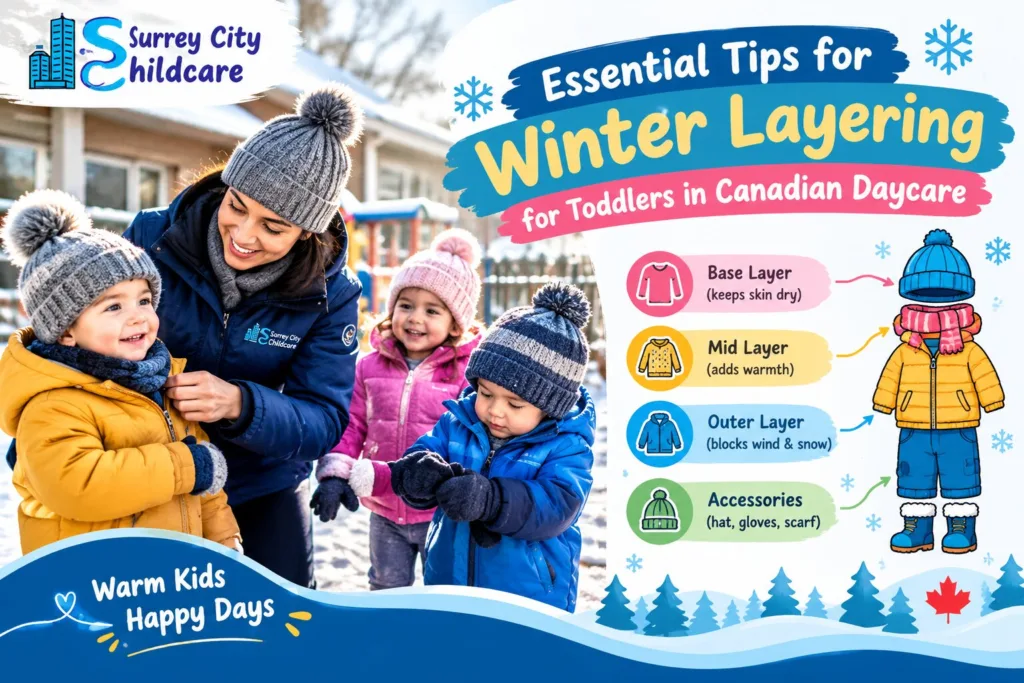
The Gold Standard: The Three-Layer Rule Explained
Canadian pediatric and childcare experts rely on a proven three-layer framework designed to handle the variable conditions of coastal British Columbia and broader Canadian winters.
Layer 1: The Moisture-Wicking Base Layer
The foundation of any effective cold-weather system is the inner layer worn directly against the child’s skin.
The primary job of the base layer for toddlers is moisture management, not heavy thermal warmth. When toddlers climb, jump, and run, their skin naturally perspires. A proper base layer pulls that moisture away from the skin and passes it toward the outer clothing.
- Ideal Materials: High-quality merino wool or polyester-blend thermal underwear. Merino wool is naturally breathable, temperature-regulating, and remains warm even if it becomes slightly damp. Synthetic thermal fabrics like polyester or polypropylene dry rapidly and offer durable, stretchable comfort.
- The Fabric to Avoid: Never choose cotton for a winter base layer. Cotton acts like a sponge, soaking up sweat and holding cold water directly against your child’s body. A cotton undershirt or cotton socks can cause a toddler to feel bone-chilled within twenty minutes of outdoor play.
Layer 2: The Insulating Mid-Layer
The second layer functions as a thermal buffer, trapping warm air that has been heated by the child’s own body.
- Ideal Materials: Breathable microfleece, polar fleece, or wool sweaters and fleece-lined pants.
- Design Considerations: Choose garments with easy-pull elastic waistbands and quarter-zip or full-zip tops rather than tight pullovers. This allows educators to quickly vent heat if a child gets warm, or remove the layer entirely during indoor transitions. Avoid bulky hoodies with oversized drawstrings, which can create safety hazards on playground equipment.
Layer 3: The Weatherproof Outer Shell
The outer layer acts as an armor against wind, wet snow, freezing rain, and coastal mud.
- Ideal Materials: A high-denier, waterproof, and windproof shell jacket or an insulated all-in-one snowsuit with fully taped seams.
- Fit Considerations: The shell must be roomy enough to comfortably cover the base and mid-layers without pinching the armpits or restricting knee bends. If the outer shell is too snug, it compresses the insulating air trapped by the mid-layer, reducing overall warmth.
Essential Accessories: Hands, Feet, Head, and Neck
Even the best jacket and pants combination will fail if a toddler’s extremities are poorly protected. When selecting canadian winter daycare gear, simplicity, warmth, and safety should lead every purchasing choice.
Warm Hands: Mittens Over Gloves
For children under the age of five, gloves with individual fingers are notoriously frustrating. Fingers get stuck in the wrong slots, and separated fingers cannot share body warmth.
- Opt for waterproof, insulated mittens featuring long gauntlet cuffs that extend halfway up the forearm.
- Secure the mitten gauntlets underneath the cuffs of the jacket or snowsuit to prevent snow and icy water from sliding down the wrists.
- Look for mittens with wide, side-zipper openings or adjustable Velcro straps that make them easy for small hands and educators to put on quickly.
Dry Feet: Wool Socks and Insulated Boots
Toddlers love stomping in winter slush puddles. Cold, wet feet will bring an abrupt end to outdoor fun faster than almost anything else.
- Pair thin-to-medium merino wool socks with boots that carry a cold-temperature rating of at least minus ten to minus fifteen degrees Celsius.
- Ensure winter boots feature deep rubber treads to prevent slips on morning frost or wet boardwalks.
- Avoid heavy, rigid boots that weigh toddlers down. Lightweight, flexible neoprene or rubber winter boots with pull-on handles allow toddlers to practice putting on their own footwear independently.
Neck and Head Protection: The Gaiter Rule
Traditional knit scarves are a major playground strangulation hazard in Canadian licensed childcare environments. Loose fringes and hanging tails can easily catch on climbing ropes, slide railings, or tricycle wheels.
- Replace all scarves with snug, stretchy fleece neck gaiters or balaclavas that tuck smoothly into the jacket collar.
- Select a beanie or toque that covers the earlobes completely and features a soft microfleece lining to eliminate itchy forehead friction.
Supporting Physical Literacy and Outdoor Play in Cold Weather
Fresh air and outdoor movement remain critical pillars of healthy childhood development regardless of the season. High-quality toddler winter outdoor play supports immune function, strengthens spatial awareness, improves balance across slick terrain, and provides natural sensory reset opportunities that keep indoor classroom behaviors peaceful and cooperative.
When young learners are bundled in heavy, stiff, or ill-fitting winter apparel, their mobility becomes severely restricted. A toddler who cannot bend their knees, lift their arms above their head, or turn their neck easily will quickly grow frustrated and withdraw from playground activities.
By applying smart layering principles, you provide exceptional thermal protection with only a fraction of the physical bulk. This lightweight freedom allows children to climb log borders, balance along outdoor curbs, and run through the crisp Canadian air with genuine confidence and ease.
Fostering Toddler Independence Through Daily Daycare Routines
In an early learning environment, dressing and undressing routines provide powerful developmental opportunities. A classroom transition to the playground is an active lesson in motor planning, sequence memory, and self-reliance.
When selecting gear for dressing toddlers for winter daycare, look at each garment through the eyes of a two- or three-year-old:
- Are the boot handles large enough for small hands to pull upward?
- Can the mid-layer pants slide over hips without complicated buttons or stiff snaps?
- Are the coat zippers fitted with an extended fabric pull-tab that little fingers can easily grasp?
When toddlers can successfully put on their own boots, pull up their snow pants, and hang their coats on low cubby hooks, they build profound self-esteem. They stop feeling helpless and begin viewing themselves as capable, active participants in their daily routines—a vital milestone that supports future transitions toward surrey schools kindergarten registration and elementary life.
The Essential Winter Daycare Cubby Checklist
Canadian winter weather can shift dramatically between morning drop-off and afternoon pickup. Keeping your child’s daycare cubby systematically stocked ensures that educators always have the exact tools needed to keep your toddler comfortable:
- Two complete sets of spare base-layer clothing, including tops, leggings, and merino wool socks.
- Two pairs of waterproof, insulated mittens so a wet morning pair can dry thoroughly while a fresh pair is used for afternoon play.
- One extra fleece sweater or warm sweatshirt for fluctuating indoor classroom temperatures.
- One lightweight fleece neck gaiter.
- One pair of indoor non-slip shoes or rubber-soled slippers to keep little feet warm off cool classroom flooring.
- A wet-bag for safely packing damp or muddy garments home for laundering.
Navigating Early Learning and Care Choices in Surrey
For parents living in British Columbia’s fastest-growing municipality, balancing high-quality early education with daily family logistics is an important priority. When evaluating a daycare in surrey bc or seeking the best daycares near me, observing how a centre manages outdoor transitions, weather protocols, and physical health provides meaningful insight into their pedagogical standards.
Whether your family is exploring nurturing infant care, searching for a city of surrey preschool setting, or shortlisting options for an accredited licensed toddler daycare surrey, you want a partner that treats physical wellness and routine care with the utmost professional dedication. Furthermore, navigating provincial affordability options—such as the Child Care Fee Reduction Initiative (CCFRI) and the Affordable Child Care Benefit (ACCB)—allows families to access substantial provincial benefits for childcare, ensuring exceptional early education remains within reach for every household budget.
Frequently Asked Questions
Why do Canadian childcare centres insist on going outside during wet or cold winter weather?
Outdoor winter play provides essential physical activity, supports gross motor coordination, reduces indoor viral transmission, and encourages sensory exploration. Licensed centres follow strict regional health guidelines, checking wind chill indices and weather advisories to ensure outdoor time is safe, active, and developmentally beneficial.
What areas in Surrey does your childcare facility accommodate?
Surrey City Childcare is situated on 100 Avenue, conveniently serving local families commuting through North Surrey, Whalley, Guildford, City Centre, Fleetwood, and surrounding Fraser Valley transit routes.
What is your typical response time when parents inquire about toddler care openings?
Our administrative team understands that planning early childhood care requires reliable communication. We review and respond to all online tour requests, program applications, and phone messages within 24 to 48 business hours on regular weekdays.
Can toddlers wear puffy winter coats while strapped into their car seats on the drive to daycare?
No. Thick, puffy winter jackets should never be worn under car seat harnesses. In a collision, the force compresses the puffy filling instantly, creating slack in the harness straps that can allow a child to slide out. Dress your toddler in their close-fitting base and fleece mid-layer for the drive, and drape a warm blanket over the buckled harness. You can put their waterproof winter coat on once you arrive at the centre.
How many spare outfits should be kept in a toddler’s winter daycare cubby?
Parents should keep at least two full changes of dry clothing in their child’s cubby at all times. This should include extra base-layer shirts, pants, undergarments, and at least two pairs of warm, moisture-wicking socks to handle messy winter splashes or toilet training accidents.
Setting Little Explorers Up for Winter Joy
Canadian winters offer young children a magical world of crisp outdoor sensory discoveries, sparkling frost, and muddy puddle experiments. By adopting an intentional three-layer clothing strategy and avoiding moisture-trapping fabrics like cotton, parents can ensure their little ones stay warm, dry, and physically confident all season long. Preparing practical winter layering for toddlers transforms what could be a cold, uncomfortable struggle into an empowering season of energetic movement, playful learning, and healthy outdoor development.
At Surrey City Childcare, located at 12250 100 Ave, Surrey, BC V3V 2X1, Canada, our dedicated early childhood educators are committed to providing exceptional care, warm environments, and enriching, play-based early learning programs every day. We believe every child deserves an encouraging space where their curiosity is celebrated in every season. If you are exploring nurturing early learning environments or wish to learn more about our experienced team, reach out today to connect with our staff and book a guided in-person tour of our modern Surrey facility.